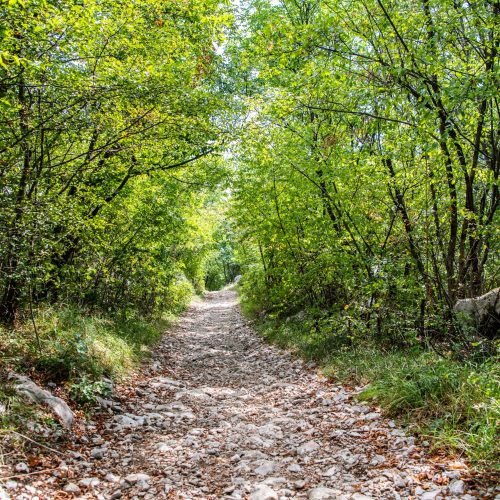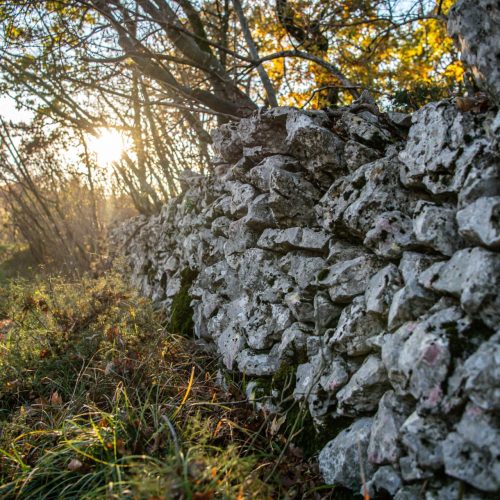
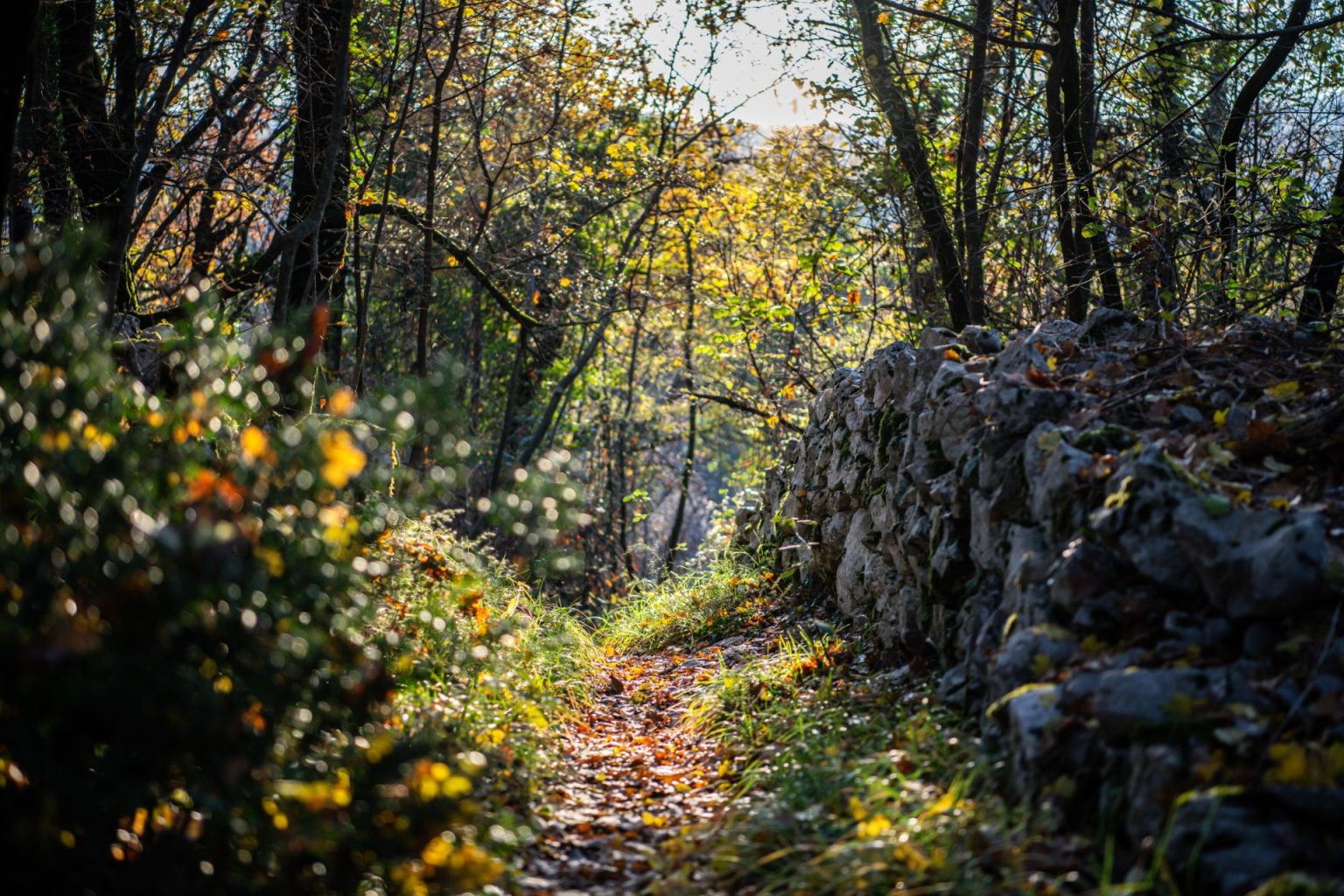
Our walking and hiking paths are small oases of peace and quiet with a different appearance in every season. This gentle landscape invites you to explore the surroundings of Viškovo in a different way.The ancient paths of the area are surrounded by centuries-old dry-stone walls. When taking a walk from one village to another, you”ll come across green groves and deep dolines. This attractive landscape lies just a few steps from the main roads and invites you to take a stroll or ride a bike among the terraced gardens overgrown with indigenous trees, where birds such as tits, blackbirds and jays make their nests while hawks circle above them. Walking on the long or short trails or up the gentle or slightly steeper ascents, the careful observer might spot a deer, fox or marten, or hear the song of a nightingale in the distance! The dry stone walls, known locally as gromača are particularly interesting. They stretch along the paths, support the old terraced gardens, and surround the small kalići ponds that were once used for watering animals.
The Milohni walking trail
The Milohni walking trail invites you to take a walk in an interesting area with a peaceful and quiet atmosphere. Walking through the forest in the direction of the charming town of Kastav or towards the typical karst landscape of Kapitovac Pond, you’ll find yourself surrounded by an oasis of peace and quiet.
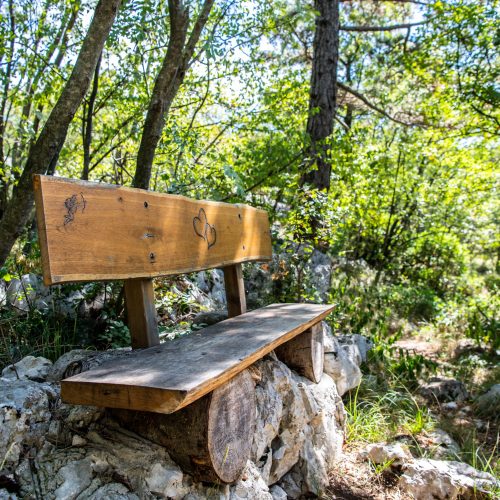
This circular hiking trail, which passes numerous karst gardens and dolines, requires an hour of easy walking and is ideal for an afternoon walk. From the village of Milohni, the trail leads through a forest in the direction of Kastav. After a resting spot, turning left gives you two options. The right path leads to Šporova Jama and the town of Kastav, and the one on the left to Bezjaki and some beautiful views of Kvaner. The latter also offers two possibilities. An easier ascent leads to the crossroads – back to Milohni to the left, or further on in the same direction to Bezjaki. From Bezjaki, the route also leads to Srdoči and Zamet.The Milohni walking trail also leads to Kapitovac pond, located in a deep sinkhole next to the village of Milohni. The access path bordered by dry stone walls leads to a deep sinkhole, and a steep trail goes down to a walled pond overgrown with deciduous trees. By choosing any of these directions, you will get to explore some lesser-known parts of the Kastav area.
The Putić od miće i vele sopele trail
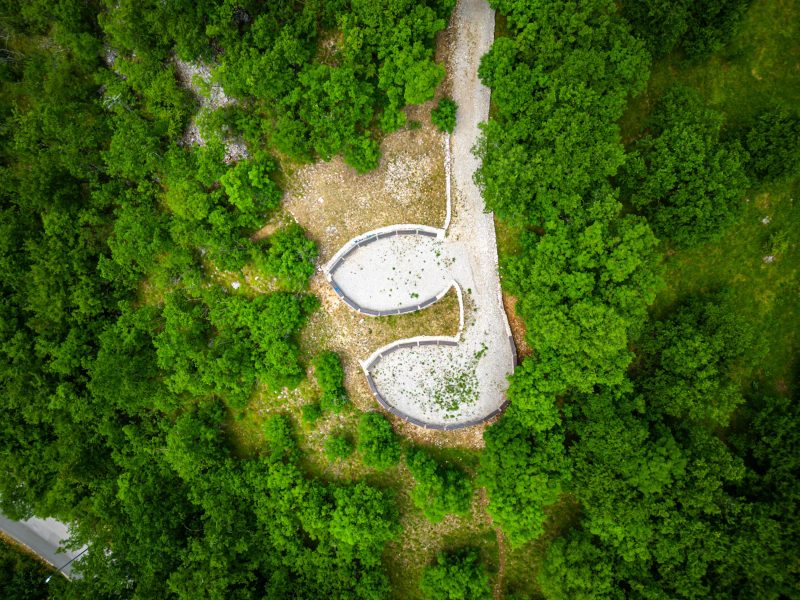
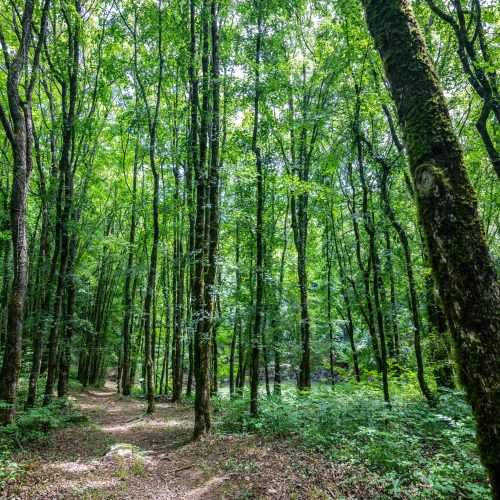
The Putić od miće i vele sopele trail evokes ancient melodies that have been preserved thanks to the efforts of Ivan Matetić Ronjgov, a musicologist whose birth house is located in the immediate vicinity. He once walked on this trail, listened to the songs of the local people as they worked in the fields, and transcribed what he heard into notes. Part of the trail takes you to a small resting spot shaped by dry stone walls, a typical architectural element locally known as gromača. After about 350 m, you will reach a vantage point offering a view of unspoilt nature and the historical town of Kastav. In every season, the barren karst soil welcomes you into a wooded area overgrown mostly with hornbeams, oaks and low vegetation.
The Plešivac walking trail
The Plešivac walking trail is suitable for all ages. Its gentle ascents are ideal for recreation and enjoying forest landscapes. This 8.6 km trail connects the villages of Marčelji and Tibljaši, and its highest peak, Plešivac (plešiv means hairless), lies at an altitude of 429 m. This walking trail is connected to a cycling trail that leads to Ronjgi and the birth house of Ivan Matetić Ronjgov, which today serves as a cultural institution and memorial house.
Starting from the Old School Marčelji towards the village of Biškupi and a resting spot area, the paths begin to fork. The branches lead to Mladenići, Petrci and Tibljaši. One branch leads to Kablari at Drenova. From Tibljaši, you can join the Rijeka trail Drenova-Pehlin and head towards Rijeka.
Lončeva griža walking trail
This 15 km walking trail is more demanding and offers wonderful views of Kvarner Bay, the mountains of Gorski Kotar, and the Kastav and Grobnik areas, especially from the limestone cliffs at the peak of Lončeva Griža, 506 m above sea level (griža means a pile of rocks). This vantage point also features interpretation boards in Chakavian, Croatian and English languages with information on the former quarry at Lončeva Griža, where boulders were extracted in the past. A smaller quarry located above the village of Skvažići was used for the needs of the village and its surrounding areas. An exhibition of old stone carving and cutting tools on the rock of the old quarry provides information on the customs of the Halubje area. modellare la pietra su una roccia della vecchia cava fornisce informazioni sulle usanze del territorio di Halubje.